/eh/2025-01-08/173633966714069467/picture.png)

/eh/2024-12-24/173503345348979036/Favorite-Icon.png)
/eh/2025-07-08/1751962110204480194/picture.png)
/eh/2025-06-21/1750485478958537574/countryInfoIcon.png)
/eh/2025-06-21/1750485741321434291/Hi-Sign-in-My-Nihao.png)
/eh/2025-06-21/1750485837193896318/cart.png)
/eh/2025-06-21/1750485968202533847/cart.png)
/eh/2025-04-17/1744862476612819675/hot-img.png)
/eh/2025-11-07/1762504524550532584/header-icon.jpg)
/eh/2025-07-07/1751875582852206790/header-icon.png)
/eh/2025-07-07/1751875587886277738/header-icon.png)

Best in 7 days


Shopping security
This tea is crafted from Camellis taliensis trees that grow wild in the remote mountains of Da Xue Shan, Yunnan province of China. Naturally untouched and thriving in high-altitude forests, these wild trees produce a tea with a pure, distinctive character that's hard to find elsewhere.
Just like previous years, we personally traveled to Yunnan to supervise the entire process - from hand-selecting the wild tea leaves to overseeing the delicate crafting of the final tea. This ensures every step is done with precision to meet our requirements.
This year's harvest brings a unique expression shaped by the natural climate of 2025 - we'll be sharing how this has influenced the tea's aroma, taste, and character.

Tea made from Wild Camellia taliensis
Da Xue Shan Wild White Tea stands out for two main reasons.
First, it’s made from truly wild tea trees that grow naturally in the mountains—completely untouched by farming or human cultivation. Second, it comes from a rare tea species called Camellia taliensis, which is different from the more common Camellia sinensis used in most teas.
By “wild,” we don’t mean old tea trees or abandoned plantations. These are wild tea trees that have grown freely in the mountain forests for generations, just like wild herbs—never planted, never managed.
What makes wild tea special can be felt most clearly in the finish. After drinking, the aftertaste is incredibly deep and long-lasting, lingering in the throat with a rich and heavy presence.
Camellia taliensis is a close relative of Camellia sinensis, the plant used to make most traditional teas. For generations, ethnic minority communities living in Yunnan’s mountain regions have been harvesting its leaves, lightly pan-frying them at home, and drinking the tea as part of their daily life.
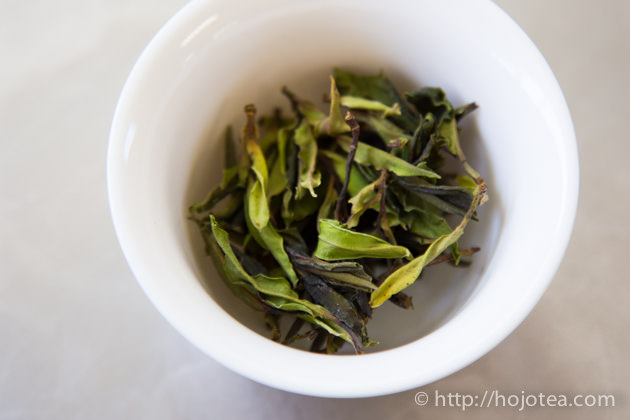
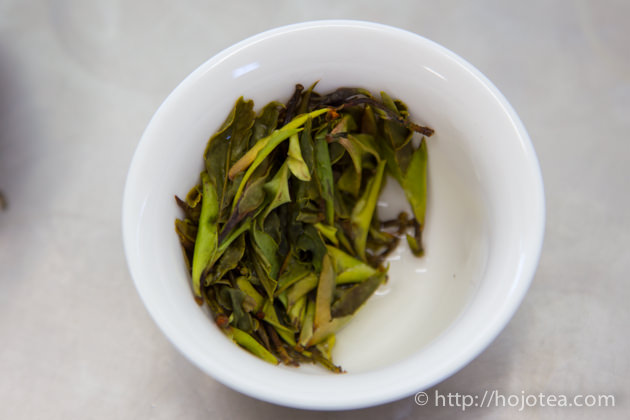
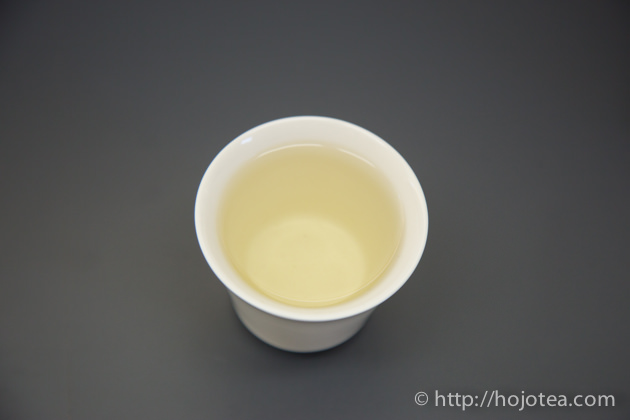
This wild white tea has a distinctive flavour profile that sets it apart. It carries a unique fruity note, often reminiscent of Shine Muscat grapes and fresh young tomatoes. Smooth, refreshing, and layered with depth, it’s no surprise that this tea remains one of the most loved in our collection.
The challenges of processing Camellia taliensis into white tea
Camellia taliensis differs from the common tea species in several ways—one key difference is its much thicker stems, which makes it especially challenging to process into high-quality white tea.
Technically, you can make white tea by simply withering and drying the leaves. But if the process isn’t handled properly, moisture often remains trapped in the thick stems. This can lead to over-fermentation, resulting in browning and a musty, off smell. In fact, many wild white teas in the market with a dark, wood-ear mushroom-like appearance are usually the result of poor processing.
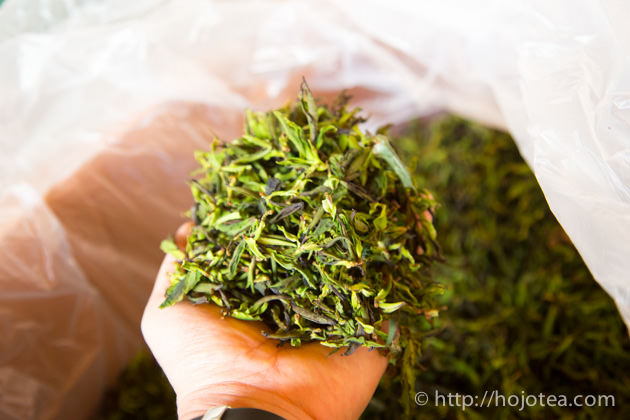
To avoid this, we traveled to Yunnan before the harvest season began and oversaw every step of the production ourselves. This included selecting the raw leaves, arranging the leaves properly, ensuring good air circulation, and checking the final moisture content. Our goal was to produce a tea that looks fresh and vibrant—like it was just plucked from the mountain, with a clean green appearance and a pure, uplifting aroma.
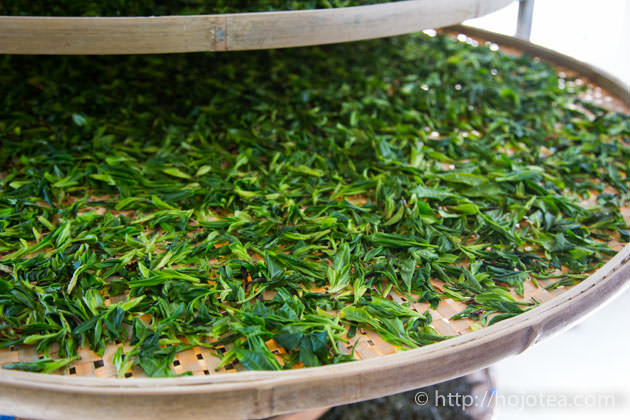
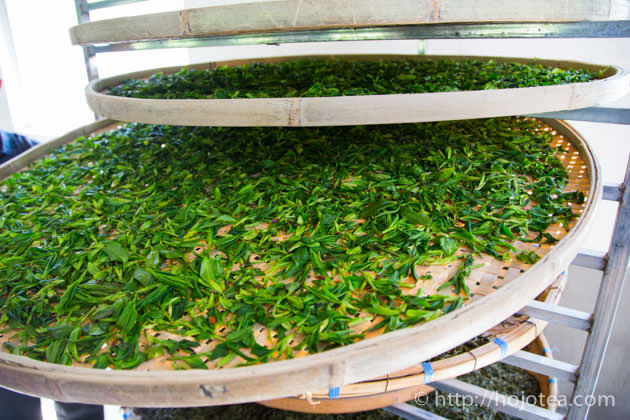
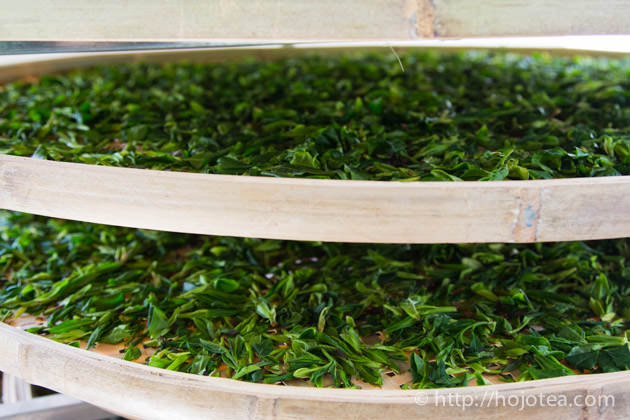
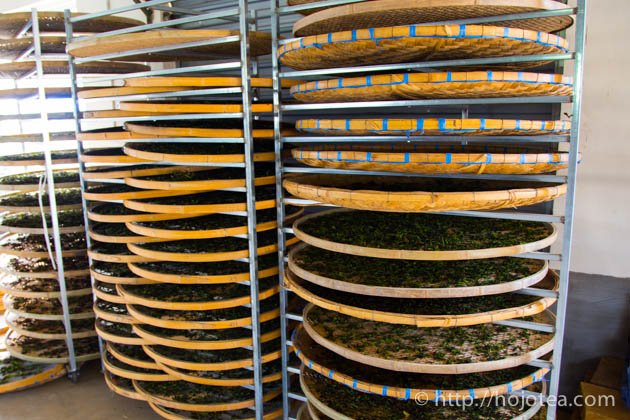
Withering process of white tea
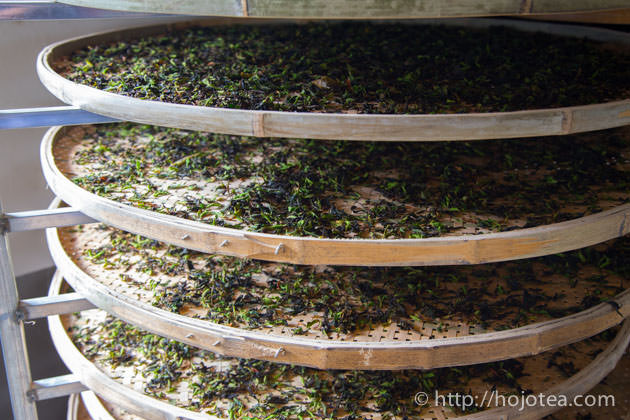
Floral and Shine muscat-like fragrance
Because rainfall and humidity vary each year, the aroma of white tea can change noticeably - even when using the exact same processing method.
This year, from late March to mid-April (peak white tea season), the weather in Yunnan was unusually dry. It hardly rained at all, and the air was so dry that even without spin drying, my laundry dried completely within two to three hours at the place I stayed.
Thanks to these ideal conditions, the withering process went exceptionally well. As a result, this year’s Da Xue Shan Wild White Tea carries a soft floral aroma with a natural sweetness, reminiscent of Shine Muscat grapes - clean, elegant, and lingering on the palate.
At this early stage, the fragrance of the tea is relatively mild, as it’s freshly produced. However, when stored in an oxygen-free environment, the aroma evolves beautifully over time. From our past experience, the sweet notes gradually become more noticeable after a few months. After about three years, a distinct fruity note—similar to grapes—starts to emerge. With longer aging, this aroma continues to mature, developing into something more like raisins.
One of the unique pleasures of white tea is being able to enjoy it at different stages—whether it’s the refreshing floral sweetness when new, or the richer, deeper fragrance that develops with age.
We invite you to experience both the freshly made and the aged versions to appreciate how time transforms this wild mountain tea.
Incredible Impact: Da Xue Shan Wild White Tea Sparkling
Da Xue Shan Wild White Tea tastes amazing whether brewed hot or enjoyed as a cold infusion. Because white tea is processed with minimal heat, its natural enzymes are still active.
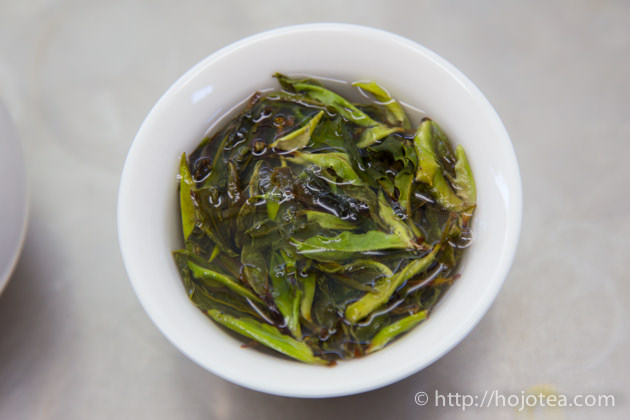
When you brew it with hot water, these enzymes are activated during infusion, triggering a light fermentation that brings out a subtle fruity aroma—almost like a lightly fermented black tea. On the other hand, cold infusion keeps the enzymes inactive, allowing the tea’s floral notes and Shine Muscat-like sweetness to come through more clearly.
If you take it a step further by carbonating the cold-brewed tea using a device like Drinkmate, it turns into a surprisingly refreshing drink. Commercial sparkling water often has a flat or odd taste and blending it with cold-brewed tea does not deliver the same result, Freshly carbonated white tea is vibrant, aromatic, and naturally sweet.
We highly recommend trying it out with a carbonation machine to create your own sparkling white tea and experience the difference.
Ships within 48 hours · Estimated delivery Jul 1 - Jul 6
US$40
Get nowSign up to your membership to get coupons up to
15%
Get nowOpportunity to enjoy order discount up to 15% off
Top-Converting Item to Boost Your Average Order


